
"coffee yield improvement"
3000 article(s) found

The main varieties of coffee are representative varieties of coffee well-known varieties of coffee
Professional coffee knowledge exchange more coffee bean information please follow the coffee workshop (Wechat official account cafe_style) Coffee belongs to the Rubiaceae, the main varieties in circulation are the following two. Arabica (Arabica): higher planting cost, better quality, particularly mellow taste, growing at high altitudes, including Nicaragua, Costa Rica and Bana

A brief introduction to the description of taste and aroma characteristics of Bolivian boutique coffee beans with rich sour taste
The aroma of Bolivian coffee is rich and unique, both the aroma of ground beans and the aroma of coffee produced are obviously strong, similar to the mixture of flower and fruit aroma. Impressive coffee in Bolivia really began to be commercially produced in the 1950s (at first coffee trees were only planted around the house as a fence), but the coffee industry developed in a very short time.

Boutique coffee specialty coffee coffee bean variety
Abstract: coffee trees are generally divided into three categories: Arabica species, Robesta species and Liberika species. With regard to the cultivation of crops, seed selection is a very important factor. Every year, agronomists are studying higher quality and higher yield varieties of wheat, soybeans and corn, as well as how to make apples more delicious, beautiful and resistant to diseases and insect pests. in fact, the same is true of coffee.

Panama Santamaria Coffee Farm-Flavor of Kadura Coffee Beans? Santamaria Cardo
Professional coffee knowledge exchange More coffee bean information Please pay attention to coffee workshop (Weixin Official Accounts cafe_style) Panama Santamaria coffee farm-Kadura coffee bean flavor? How do Santamaria Kadura varieties get hand-washed? Santamaria Estate Coffee Farm is located in Paso Ancho, Cerro Punta, Bugaba District, Chiriqui Province, Brazil. planting
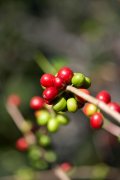
What's the aroma of coffee? Caramelization and Mena reaction during coffee roasting
Boutique coffee beans must be excellent varieties, such as the original bourbon species, mocha species and Tippica species. The coffee beans produced by these trees have unique aroma and flavor, which is far from that of other tree species, but the relative yield is low. in recent years, in order to pursue the ability of disease and insect resistance and increase the yield, there have been many improved tree species, such as the massive promotion of high-yield rurial11 species in Kenya.

Flavor description of Organic Coffee beans grown in Alpine catimor of Yunnan Province
Flavor description of Yunnan catimor Alpine Organic Coffee beans Taste treatment production areas introduce two classic high-quality coffee varieties, Typica and Bourbon, which are the main varieties of coffee in Yunnan, and the Katimo Catimor series were introduced from Kenya in 1991 (stronger anti-virus ability and higher yield). The variation of Arabian species (also known as small-grained species)

What is Icatu Icatu Brazil What flavor is Icatu coffee?
Professional coffee knowledge exchange More coffee bean information, please pay attention to coffee workshop (Weixin Official Accounts cafe_style) Icatu: Brazil multi-generation hybrid improved varieties, once entered Brazil extraordinary cup top ten. In the past, Arabusta Arabusta, a blend of Arabica and Robusta beans, has improved yield and disease resistance, but coffee flavor has been poor. section

Rich and unique Bolivian fine coffee bean flavor taste aroma characteristics Description Introduction
Because Bolivia produces so little, we don't have much chance of drinking it. Because the smaller the yield, the more precious it is. For my personal preference for Central American coffee, I still have more expectations for Bolivia, a small and beautiful coffee-producing country. In the past, Bolivia's coffee was mostly of average quality, but in recent years, fine coffee production has developed rapidly and a lot has appeared.

What kind of coffee does Sidamo produce? how does Sidamo coffee taste?
Coffee is Ethiopia's main economic crop and the country's largest crop export and important industry. It accounts for 60% of Ethiopia's total export value and supports many small farms, as well as sugar, bananas and cotton. It is also Ethiopia's largest and important commodity export crop after oil, and it is also the largest export of Elaraby in Africa, in 1997.

Bolivian coffee beans rich and unique origin and development history and culture brief introduction
Because Bolivia produces so little, we don't have much chance of drinking it. Because the smaller the yield, the more precious it was. For my personal preference for Central American coffee, I still have more expectations for Bolivia, a small and beautiful coffee-producing country. In the past, Bolivia's coffee was mostly of average quality, but in recent years, fine coffee production has developed rapidly and a lot has appeared.

Bolivian Coffee Karanawi Flavor description Grinding scale Variety production area Manor
Bolivian coffee Karanawi flavor describes the grinding scale variety produced in the region manor. The annual output is between 6000 and 10000 tons. The main reason is that the hardware is relatively backward. The important reason is that the altitude is too high. But the delicious and low-yield Tibica is also to blame. In recent years, under the advice of experts. Kaddura, which has a high yield and good flavor, is also planted. Kaduai. It is hoped that midwifery can be improved. Generally speaking, the boutique coffee beans of the producing countries are better than those of the other countries.
The world's second largest coffee company is stationed in Vietnam
Mondelez International, the world's second-largest coffee company, has opened its first farmer training center in Vietnam to help Vietnamese coffee growers improve their planting methods and increase production. According to Vietnamese media reports on the 8th, the center, called Coffee making Happiness, plans to provide free training courses for 1500 coffee growers in Vietnam.
The government of Rwanda will adopt a new coffee policy
The Government of Rwanda will adopt a new coffee policy to improve the yield and quality of coffee cultivation. The policy aims to improve the capacity of coffee cultivation research, use science and technology to increase production and effectively prevent pests and droughts, strengthen the supporting industry of coffee, and ensure the operation and profitability of coffee processing plants. It is reported that 40% of Rwanda's coffee is processed, which will increase the export value by 10%.

Introduction to the description of planting flavor of coffee bean varieties in Yunnan
Following Ka Pin (Wechat official account vdailycom) found that two classic premium coffee varieties, Typica and Bourbon, which are the main coffee varieties cultivated in Yunnan Province, have opened a small shop of their own. In 1991, Katimo Catimor series varieties were introduced from Kenya (more resistant to virus and higher yield). A variety of Arabian species (also known as small grain species)

Description of taste and flavor of Yunnan small-grain coffee
How to brew small grains of coffee in Yunnan to describe the taste and flavor of manors in producing areas 1. Sexual reproduction is a breeding method to obtain a large number of seedlings at one time, first of all, seed selection and seed treatment. Improved varieties are the basis for cultivating strong seedlings and increasing per unit yield. good varieties must be carefully selected, on the mother tree of coffee, the selection is completely mature, the fruit shape is normal, full and full, the size is the same, with two seeds.

Yunnan, China Description of Coffee Flavor Processing Characteristics Introduction of Grinding Degree
Iron pickup (typica): The most classic high-quality Arabica species, many commercial improved species are now derived from this. Excellent taste performance, is recognized as a fine coffee variety, but the yield is extremely low and susceptible to rust disease, requiring more manual management. Tiekka coffee is native to Ethiopia and southeastern Sudan and is the most widely cultivated coffee variety in the Western Hemisphere. plants

What are the varieties of Arabica coffee beans? What are the derivative types and characteristics of Arabica coffee beans?
Professional coffee knowledge exchange more coffee bean information please follow the coffee workshop (Wechat official account cafe_style) what are the varieties of Arabica coffee beans? What are the derivative types and characteristics of Arabica coffee beans? From the point of view of appearance, Arabica bean is long and flat, the central line is S-curve, Robbosa bean is strong, the shape is more round, and the central line is closer to a straight line.

Introduction to the classification of coffee varieties and the characteristics of coffee variety distribution
Coffee tree is a flowering plant of the genus Coffea of Rubiaceae. At present, there are about 120 species, ranging from small shrubs to 18-meter-tall trees. Wild coffee species grow irregularly in the tropics, and new species are still being discovered. Strictly speaking, there are only two major species of coffee that are cultivated to produce coffee: Arabica coffee (Arabica) and Canifra.

Colombia coffee beans castillo coffee beans is what kind of varieties
Professional coffee knowledge exchange More coffee bean information Please pay attention to coffee workshop (Weixin Official Accounts cafe_style) Front Street-Castillo coffee variety introduction Since the 1950s, catura has been a very common variety in Colombia because its yield exceeds that of traditional iron pica or bourbon. However, while giving more yield, coffee leaves are equally susceptible

Brazil is committed to the study of "tomorrow Coffee"
Brazil is the strongest coffee producer in the world, and coffee technology is leading the world. A few years ago, scientists used genetic comparisons to find out whether the descendants of Bourbon and Tibica introduced 300 years ago still exist in Brazil. it was found that Brazil's existing bourbon and Tibica had nothing to do with their counterparts in Yemen, Ethiopia, Bourbon and Kenya, and had long been assimilated or localized. If you say "E"